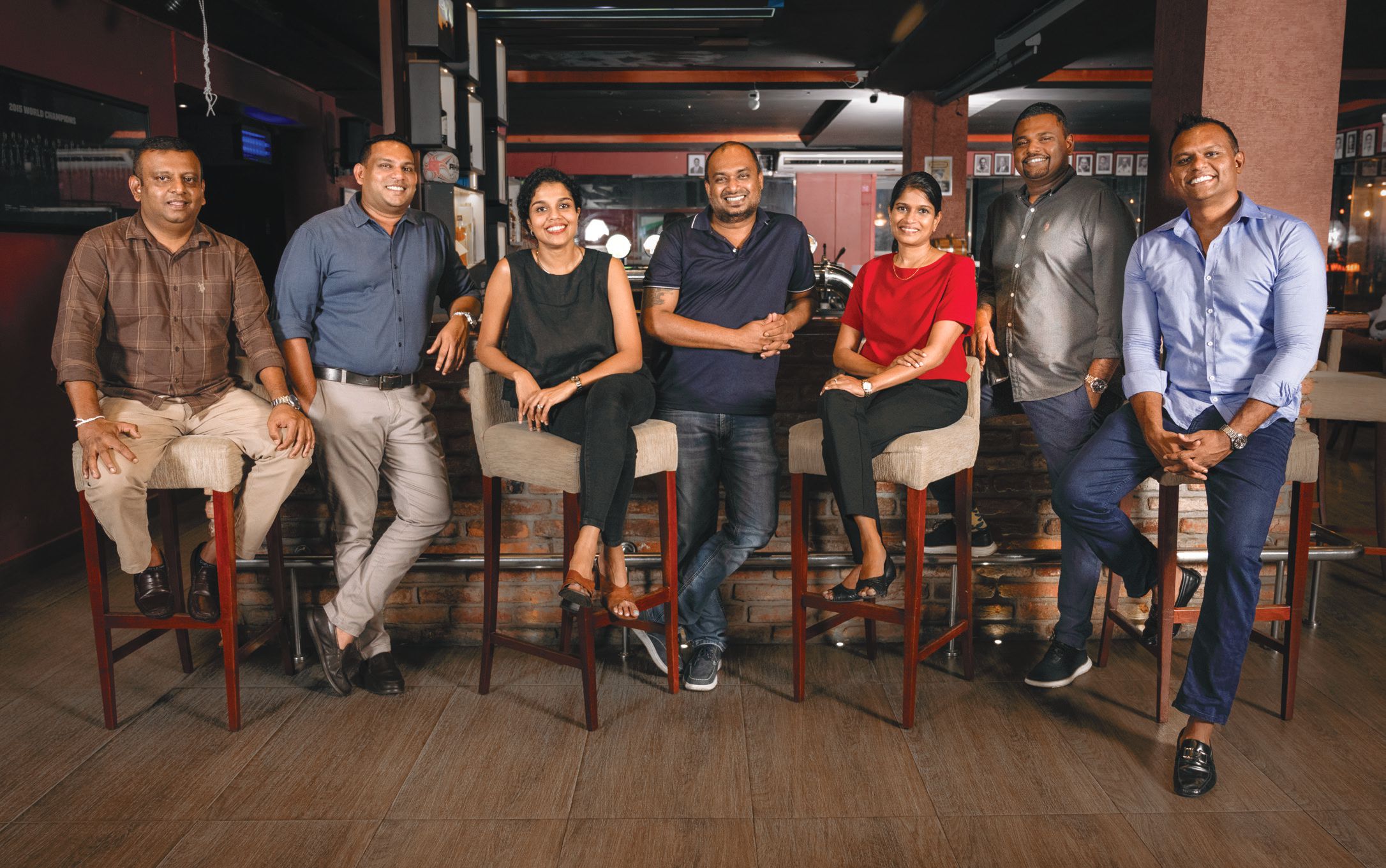
Photo Caption - L-R
Asanka Perera, Vice President-Draught Beer Gayan Dodanwala, Senior Vice President Sales & Trade Marketing Sharina Bandaranayake, Vice President Modern Trade Sakuntha Amarasekere, Vice President Consumer & Market Insights Ruchira Money, Senior Vice President Premium Category Madhushanka Ranatunga, Chief Sales Marketing Officer Prashan Costa, Senior Vice President Marketing, Regular Category.
Built on Legacy, Lion Brewery Is Driven by What Comes Next
Inside its push into craft beer, new export markets, and a category it's determined to grow, not just lead.
In the hills of Nuwara Eliya, more than a century ago, The Brewery began as a single operation making beer for a small domestic market. Today, its brews carry Sri Lankan brewing to the world, and its stout has been crowned the world's best in its category. Yet inside the company, the prevailing instinct is not to defend that position, it is to keep moving.
Over the past decade, Lion has grown from four core brands to more than twenty, pushed into craft beer and premium categories, and leaned harder into global partnerships with Carlsberg and Diageo to bring international standards into a distinctly local operation. The ambition, as Madhushanka Ranatunga, Chief Sales and Marketing Officer at Lion Brewery, describes it, is not simply to protect market share in an industry Lion already leads, but to grow the size of the occasion itself, the moments, tastes and markets in which Sri Lankans and, increasingly, an international audience, choose to reach for a Lion beer.
What does this recognition say about the journey of Lion today?
For more than 140 years, Lion has chosen the road less travelled. Our focus is on shaping the categories, capabilities, and brands of tomorrow. Legacy inspires confidence, but it can also encourage complacency, a risk Lion has never accepted. Lion ranks among the country's ten most valuable brands, and the only FMCG brand in the top 10, while Carlsberg has entered the country's Top 50, strengthening an already formidable portfolio. International recognition continues to follow. Lion Stout was crowned World's Best Tropical Stout, and Lion Lager received Silver at the 2025 World Beer Awards, a global benchmark for brewing excellence. The business was also recognised as Best Exporter in Beverages at the Presidential Export Awards 2024/25. Our 2030 Long-Term Plan builds on that momentum. The goal is not simply to grow, but to reshape the future of Lion.
What responsibility comes with leading Sri Lanka's most valuable beer brand?
There is a difference between being the largest player and leading the category. Scale gives us reach; leadership demands responsibility. Sri Lanka remains an emerging beer market, with consumption centred mainly on off-premise environments. In more mature beer markets, on-premise occasions play a larger role in shaping consumer behaviour and building beer culture, and that gap represents significant headroom for Lion and the category. Beer is also an acquired taste. Preferences for flavour, strength, and occasion develop gradually through familiarity and experience. Leadership therefore demands more than defending market share. It requires growing the category itself, by creating new occasions, elevating experiences, and shaping the role beer plays in people's lives.
Beyond commercial success, what gives Lion its place in the lives of Sri Lankans?
Awareness and availability can be built; meaning must be earned. At its core, the Lion brand stands for leadership, local pride and adventure, values that have become powerful symbols of Sri Lankan identity. For the diaspora consumer, Lion is a reminder of home. For new consumers, it is an invitation to discover a brand that is confidently different. As we enter new markets, we remain authentic to our origin story while ensuring the brand builds local relevance. Propositions respond to local tastes, route-to-market models adapt to local trade realities, and brand expression reflects local culture. Our values, however, remain constant. International growth is measured by more than presence. We are building a brand whose story of courage and resilience resonates across cultures.
How is Lion creating the next chapter of growth?
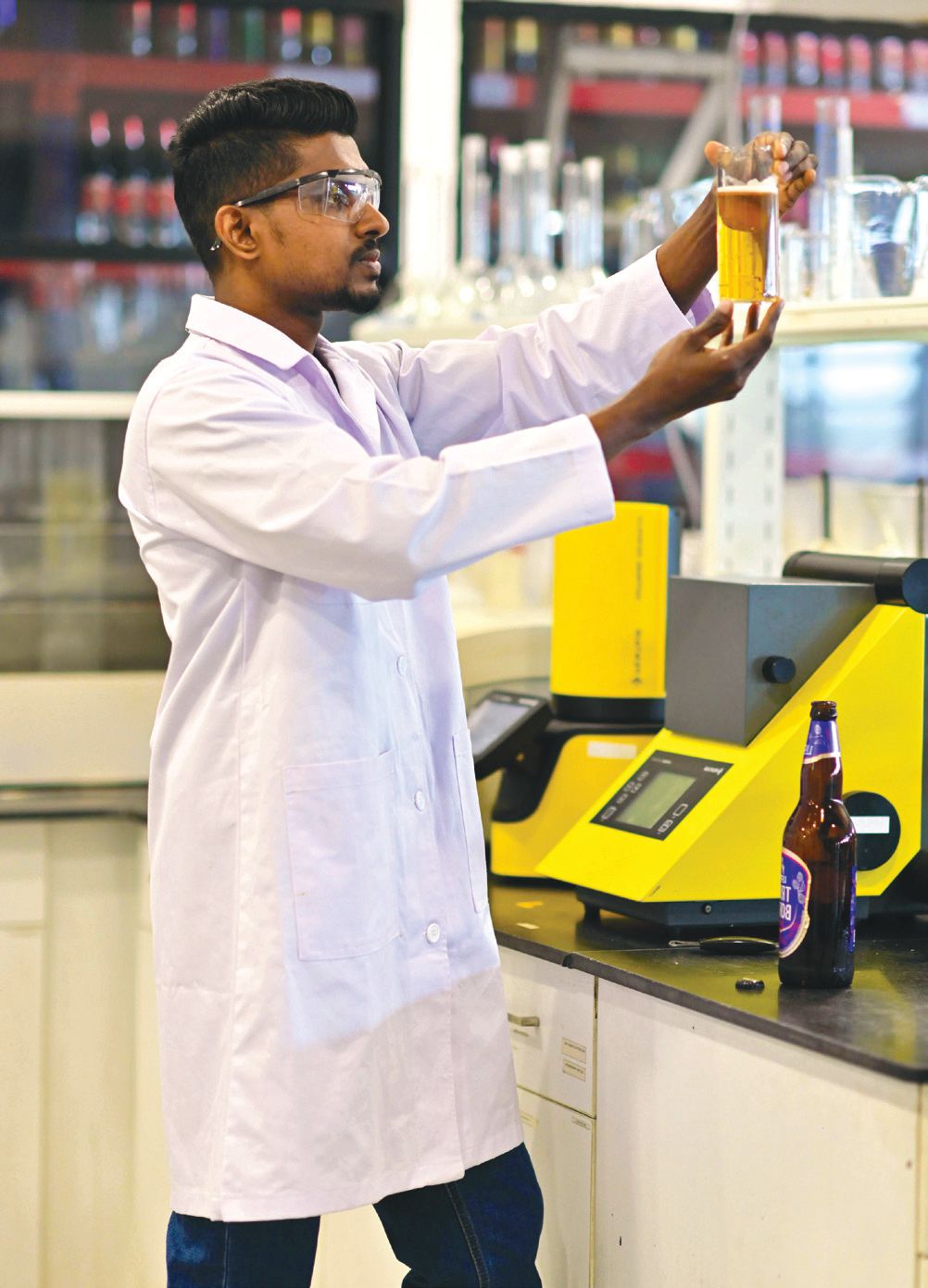
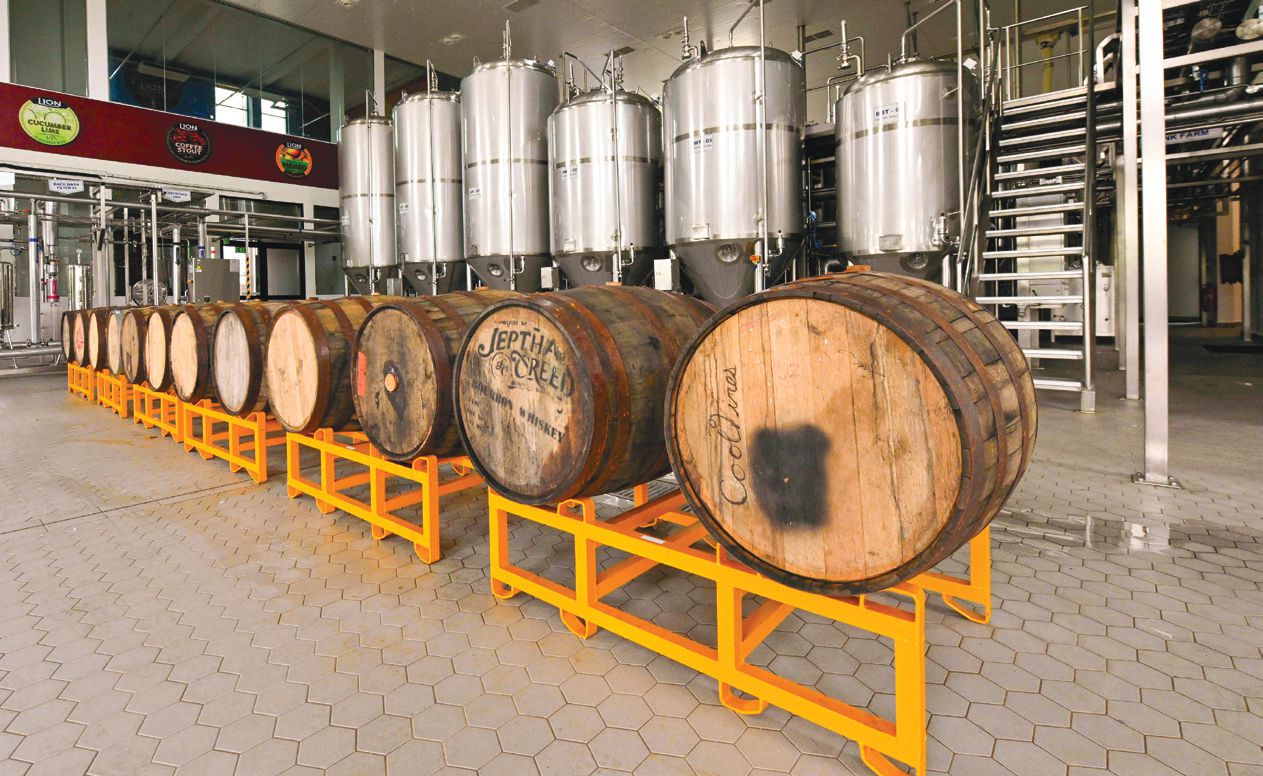
We recognise that no single proposition or taste profile can satisfy every need. While Lion Lager, Lion Strong, and Lion Stout remain the foundation of the business, their enduring success gives us the confidence to expand beyond the core. Our portfolio is designed to play distinct roles: core brands drive scale, the premium portfolio elevates the category, and craft platforms explore emerging tastes and new occasions. Innovation is how we create the next opportunity for growth. We've invested in dedicated innovation teams, smaller-volume manufacturing capability, and an Innovation Brewery that enables rapid experimentation with beer styles and ingredients. Products such as Trueborn challenge conventions within familiar category spaces, while our broader craft portfolio widens how consumers experience beer.
The value of this capability extends well beyond immediate revenue. Craft concepts are introduced through premium HoReCa (Hotel, Restaurant, and Café/Clubs) venues in key tourism destinations. This disciplined pathway, from experimentation to commercial success, lets us seed ideas, learn quickly, and scale the strongest propositions through the full strength of Lion's route-to-market capability. The future of the business will be shaped by depth and breadth. Through depth, we strengthen the quality, consistency, and availability that reinforce our leadership. Through breadth, we recognise that consumer needs continue to evolve across the wider AlcoBev landscape, and that different occasions demand greater choice. The challenge is no longer simply identifying the next product opportunity, but recognising the occasions, categories, and experiences consumers will embrace next.
This ambition is built on capabilities that go beyond brewing. We understand liquids, brands, consumers, and trade, and we've built one of the country's strongest route-to-market systems. We're also experts at winning in a market where communication is constrained and the final metres between brand and consumer often determine success. Our opportunity is to apply that same discipline in brand building, consumer insight, innovation, and route-to-market execution across the wider food and beverage landscape, setting a new benchmark for Sri Lankan FMCG businesses. Some opportunities will strengthen categories we already lead. Others will take us into entirely new territory. For a company that has always chosen the less travelled road, that is not an uncomfortable place to be.
How far along is Lion Beer on its Vision 2030?
We are on track with most of it. One of the biggest challenges, as well as one of the biggest changes, has been the introduction of many styles of beer to Sri Lankan consumers. A couple of years ago, we were a four-brand company. Today, we offer more than 20 different brands and styles. As consumers progress in their lifestyles, they have various choices to try. As the leading brewery in the country, our main objective is to give them more and more options, so that we can serve every occasion they want to enjoy their beer with.
Digital Lion, part of your 2030 plan, integrates SAP systems with manufacturing to drive efficiency and quality. How is that transformation progressing, and what can other businesses learn from it?
Digital Lion has become more of a way of life for us than a single initiative. Beyond standard tools like our ERP and sales force automation, we've brought in a number of AI engines that have made decision-making much faster, and the analytical skill of our people has grown alongside it. We've integrated a lot of new tools across the business so that everything is seamless, from the point we pick up sales data at retail, back through to production and sourcing. That connectivity allows people to make better decisions and gets us faster to market, so we can serve our customers even better.
How have recent innovations, from small-batch exclusives to premium variants, contributed to revenue, and to Lion’s ambitions of growing export markets?
Innovation has added significant value to our master brand. Sri Lanka is a small beer market, and consumers today travel more and see a lot more online, so they expect variety. We can't just offer what's comfortable for us. We want to give consumers real choice, and that's part of the longer-term vision we've set alongside the 2030 plan. In pure number terms, the contribution is small, but it has helped bring a lot of value back to the brand. One of the best examples of that is the award itself, which shows how that value returns to the brand and, in turn, to the consumer. Our focus throughout has been on how we cater to evolving consumer needs.
Talent is one of the most important parts of our 2030 journey. Homegrown talent is a big agenda for us, and as leadership, we've put a lot of time and effort into building it, because you can have the best brands in the world, but without the right talent, the ability to bring them to market, and the agility to stay close to consumers becomes a real challenge. We have always been a scale operator, and everything was built around scale. That has changed. Getting small batch volume products out to consumers meant a mindset shift as much as anything else, and it had to be managed carefully. Our organisational structure evolved to reflect that: one set of people runs the core commercial business, while another specialises in these small batches, working almost brew by brew with consumers and customers. That combination, more than any single factor, is what has helped us build out this innovation centre.
Craft beer is a major industry globally. Are you ready for that kind of innovation when it does?
Yes, and I think it's time Sri Lanka evolved to that. It's not just the Western world. The best example is India, and how Bangalore has evolved. It started with a few craft breweries, and now there are several, and the culture across that entire city has changed. I think it's time regulators look again at microbrewery licensing here. Right now, we have invested in the innovation centre, and we're working on craft beers to bring to consumers. But the real evolution is the ability to sit inside a brewery, enjoy your meal, and enjoy your drink in the microbrewery itself. That's a different culture, a different experience that Sri Lanka can offer consumers, and tourists too. We're a nation that depends heavily on tourism, so there's a real opportunity for craft breweries to play a role in those larger tourism plans.
How do global partnerships strengthen the future of the business?
We combine global expertise with deep local understanding. Carlsberg brings world-class brewing expertise, category knowledge, and global best practice. Diageo complements the portfolio with the world's leading premium spirits brands, including Johnnie Walker.
Working alongside global leaders introduces rigorous thinking and disciplined processes. Quality is not a single function or final inspection; it is embedded throughout the business, from sourcing ingredients and selecting suppliers to brewing, manufacturing, and distribution. The partnership is collaborative. Carlsberg contributes global capability, while Lion brings deep local insight, proven route-to-market expertise, and decades of experience operating in one of the region's most complex alcoholic beverage environments. Simply put, we deliver global brands to international standards while executing with local precision.
The result is a business structured for international growth. As Sri Lanka's largest AlcoBev exporter, Lion has expanded through disciplined, market-specific execution rather than broad geographic expansion. Our growing international presence shows how global capability and local understanding reinforce one another, and it continues to guide our expansion across the Middle East, Africa, and beyond. Every market has its own consumer preferences, occasions, and trade dynamics. Success depends on understanding each market on its own terms and shaping the proposition accordingly.
Your licensing agreement with Carlsberg is one of your most valuable partnerships, giving access to techniques, tools, and networks. How has it helped raise quality assurance to meet global vendor standards?
We've learned a great deal from two partnerships in particular: Carlsberg, and Diageo, two of the best in the industry globally. From both, we draw on deep knowledge, from product development to commercial strategy. We take the systems and processes these companies have built and customise them to our local context, so it's effectively a hybrid model built around our own standards.
That hybrid system has helped us on product quality and on meeting global benchmarks. Within the Carlsberg network, we also take part in a monthly panel evaluating their brands which gives further validation of meeting global quality standards. It has also helped us navigate new technology as it emerges in the brewing world, since our access to the Carlsberg network means we're rarely behind on that front. On top of that, the partnership gives us access to regional sourcing hubs, which brings further benefits alongside everything else.
Lion holds market leadership in the Maldives. How is that experience shaping your approach to expansion into other new export markets?
The Maldives is a completely different market compared to the rest of the world. We have the advantage of being closer to Malé, and we've been in that market for quite some time. We're also a large draught beer operator there.
From a broader business strategy perspective, our approach has been to focus on a couple of markets with real potential, rather than spreading ourselves across many smaller pockets. A couple of years ago, we pulled back from most markets and focused on the ones where we could create real differentiation as a brand. In 2021, alongside our relaunch, we also refined some of our values so that the brand could sit comfortably within these more competitive markets. Africa has been significant for us, and I expect it will continue to be. We're also active in the Middle East and parts of Europe. In markets where we have strong focus, we have people on the ground managing our brand directly, alongside good distributor partners. Building a brand, rather than simply trading in these markets has been the priority. We want Lion to hold its own position, distinct from the rest of the beer portfolio that any distributor or market may carry, and we want to make sure that clear positioning is established in these markets.
How is LBCL building a business that will endure?
Pioneering new frontiers begins by strengthening resilience. Currency movements, supply disruptions and economic volatility have reinforced the importance of building a business that can adapt, endure and grow under changing conditions. Developing local capability is one part of that strategy. Where Sri Lankan suppliers can meet Lion's standards, investing in domestic capability reduces exposure to disruption while creating greater value within the local economy. The standard does not move; capability must rise to meet it.
Technology is another pillar of resilience. The Digital Lion journey is creating a smarter, more connected business where integrated systems improve visibility, connect people and processes, and enable better decision-making. Leadership at this scale also carries broader responsibility. As one of Sri Lanka's largest manufacturing investors, Lion contributes through exports, foreign exchange earnings, taxation and the wider economy. Our responsibility extends beyond financial performance to creating long-term value.
That commitment is reflected in the way the business operates. More than 90 percent of bottles are reused, while recycled glass remains an integral part of the production system. Our waste water treatment facilities have become learning benchmarks for university students, and initiatives such as Melting Point demonstrate how innovation transforms waste into value. Energy efficiency and renewable alternatives are equally important to long-term resilience. Investments in our biogas plant, improve efficiency and strengthen environmental performance as part of everyday operations. In addition to these the Global Drinks Intel ESG Award and the Presidential Environment Award of 2025, recognsed our ESG efforts, as we continue to build resilience through stringent systems, stronger partnerships and enduing value.
“We understand liquids, brands, consumers, and trade, and we've built one of the country's strongest route-to-market systems.”
COVID, the economic crisis, and the ongoing Middle East geopolitical crisis have all underscored the need for supply chain resilience. Localising suppliers has been a major focus as a result. How much of your raw material is now sourced locally, and how has this helped you navigate economic shocks?
We've localised as much of the material as possible. Unfortunately, one of the main ingredients for beer is malt, and there's no way around sourcing that from overseas, so that component still comes from abroad. But a lot of other raw material and packaging, including the labels we use on our bottles, were bought from overseas for a long time. We've now worked with a local supplier instead, given the complexity involved and the expectations we hold from a brand standpoint. We've gone into detail on our packaging and worked closely with suppliers, specifically on developing them, giving them the global technology required to meet our standards. We've managed to bring a lot of this locally now, though a component will always come from overseas, which is inevitable given the industry we're in. As much as possible, though, we've shifted a lot of that sourcing to the local market.
Lion Beer is one of the country's largest taxpayers. How do you balance this obligation against the need to reinvest in the business, expand into export markets, and add more value?
That's a fine balance we need to strike. Lion occupies a unique position, not only as a significant contributor to state taxes, but as the country's largest alcohol-beverage exporter, bringing in valuable foreign revenue. In FY2026 alone, we contributed Rs103.8 billion in taxes to the state. Looking back over almost a decade, our cumulative contribution is approaching half a trillion rupees — comparable to the cost of building a national landmark like the Victoria Dam. That is the scale of the contribution Lion makes to the fiscus. And we are paying that in an industry that has real room to grow, if some of the constraints around access are addressed. One of the biggest challenges we have is around retail licensing. Our policy is very stringent when it comes to access to duty-paid alcoholic beverages. In other markets in the region, like Vietnam or Thailand, consumers have legal access close by. In Sri Lanka at present there is approximatively one licensed outlet per 15 sq kilometers.
That lack of access has consequences. It drives demand towards duty-unpaid, illicit products; these are unregulated and unsafe, and that has a knock-on effect on public health as well. It's an area that really needs to be looked at again. There's also a tourism dimension to this. Sri Lanka is a tourist-dependent nation, and we've seen a lot of new tourist pockets emerge in recent years, small hotels, villas, and the local businesses that depend on them. Many of these areas don't have easy access to licensing, even as they cater to a growing and evolving tourist market. When we look at our retail penetration compared to the broader FMCG industry, we sit at just 1.5%, largely because of these licensing regulations.
“In FY2026 alone, we contributed Rs103.8 billion in taxes to the state. Looking back over almost a decade, our cumulative contribution is approaching half a trillion rupees — comparable to the cost of building a national landmark like the Victoria Dam.”
As a flagship employer within the group, how has Lion Beer worked to retain talent in such a technical industry?
Our main focus as an employer of choice is creating real value for our people. What we call the Lion culture is unique. We're a dominant operator in our market, but the mindset required here is very different from most other industries, because we operate in what's effectively a dark market, with a restricted retail universe. That combination calls for a specialised skill set. If you come from an industry with open advertising and open retail, your mindset is shaped by an enormous playing field. Here, the field is restricted, and you need to be exceptional within those boundaries.
We've built a number of initiatives around in-house people development, because we believe strongly in homegrown talent given how specialised this industry is. One of those is the Lion Marketing Academy, run entirely in-house. It has different stages that build people's know-how, how global brands are built in this category, how the operations side works, and so on. The supply chain side has its own equivalent structure. Every department has its own mechanisms to help people qualify and grow within their area.
These aren't classroom sessions. They're structured on the job. If someone is identified as a critical talent, they're assigned a mentor and taken through a set of courses over time. There's a balance to strike here, especially with how Gen Z thinks about careers, wanting things fast and agile. Some areas can move quickly, but others need real time and effort before someone becomes a rounded professional in their specific area. There's a lot of work behind this. I personally spend around 20 to 25% of my time on people development, and it's a focused strategy.
Looking ahead to 2030 and beyond, what does the next few years look like for Lion Beer?
By the time we reach 2030, we'll have many more choices across different brands, pack sizes, and offerings, making sure every consumer need is catered to from both a portfolio and an offering perspective. Our digital footprint will also be far more advanced; we've grown utilisation of our digital tools by more than 200% already. Right now, we're working on a major project to move to a new sales force automation system with one of the leading global players in that space. That's opening up a lot of new ways of looking at things. For our trade partners and distributors, it means much more seamless, digitally enabled interaction with the company. It's also going to be much faster. Partners won't need to wait for their area salesperson to visit or action something; they'll have a digital interface to reach us at any time, ensuring best-in-class service. And ultimately, that extends to our consumers too, who remain a very integral part of our business and everything we do as stakeholders.